
For years, AI has been positioned as the great accelerator for software engineering—promising faster delivery cycles, smarter decision-making, and streamlined development processes. In theory, AI should remove friction from engineering teams and turn complexity into clarity.
In practice, most enterprises are struggling to make that vision real.
While AI capabilities have matured rapidly, organizational readiness has not kept pace. Many companies attempting to deploy AI at scale are discovering that the real blocker isn’t the technology—it’s the environment the technology is being dropped into.
In particular, the surge in AI copilot adoption over the last year has exposed a gap between developer convenience and enterprise impact. Most copilots are optimized for individual productivity, not for end-to-end engineering performance.
However, copilots alone are not enough. Enterprises don’t just need smarter tools—they need smarter systems.
To unlock real value, AI must be embedded across the entire software lifecycle, not layered on top of broken processes. Intelligence needs to be woven into how software is planned, built, tested, governed, and evolved.
This is the difference between using AI and engineering with intelligence.
An intelligent engineering approach, according to Ness Digital Engineering, treats AI as a foundational capability—one that informs architecture decisions, optimizes workflows, enforces governance, and continuously improves outcomes. Instead of episodic automation, intelligence becomes systemic.
Ness Digital Engineering has focused its strategy on this exact challenge. With deep expertise in AI, cloud modernization, and product engineering, Ness helps organizations re-architect their engineering foundations to deliver measurable business results—not just technical upgrades.
At the center of this approach is ATONIS, a purpose-built AI workbench designed to span the full Software Development Lifecycle. Rather than functioning as another isolated tool, ATONIS connects planning, development, testing, deployment, and operations into a single intelligent system.

By embedding AI-driven insights and automation across the SDLC, ATONIS transforms software delivery from a reactive process into a predictable, continuously improving engine.
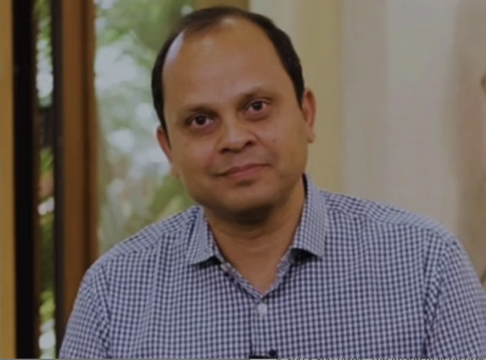
The global expansion of ATONIS enters a new phase with Vikas Basra stepping into the role of Chief Technology Officer for the platform.
As CTO, Vikas will bring a clear technology vision and a results-driven roadmap aimed at scaling intelligent engineering practices across enterprises worldwide. His leadership is expected to further strengthen ATONIS’s ability to deliver AI-powered outcomes that translate directly into business value.
Before joining Ness Digital Engineering, Vikas held senior technology leadership positions at organizations such as Genpact and Cox Automotive Inc., where he led large-scale initiatives in AI, GenAI, Agentic AI, and enterprise modernization. His track record includes building enterprise AI platforms, leading high-performing engineering organizations, and delivering sustained productivity and cost improvements across Fortune 500 and private-equity-backed companies.
That experience now feeds directly into shaping the future of ATONIS.
ATONIS is designed as an end-to-end intelligent engineering platform, enhancing human capability rather than replacing it. By combining automation, generative AI, and real-time analytics, it removes long-standing bottlenecks while improving quality, transparency, and predictability.
Unlike traditional development tools, ATONIS provides continuous visibility into engineering speed, risk, and outcomes across the lifecycle. Through a combination of proprietary accelerators and strategic ecosystem partnerships, organizations using ATONIS have achieved:
- Up to 50% reduction in manual engineering effort, accelerating time-to-market
- Approximately 70% improvement in engineering productivity through automated planning, development, and testing
- Significantly higher engineer engagement, with AI-augmented workflows enabling teams to focus on higher-value work
These results aren’t about automating people out of the process. They’re about eliminating the friction that slows teams down and erodes trust.